
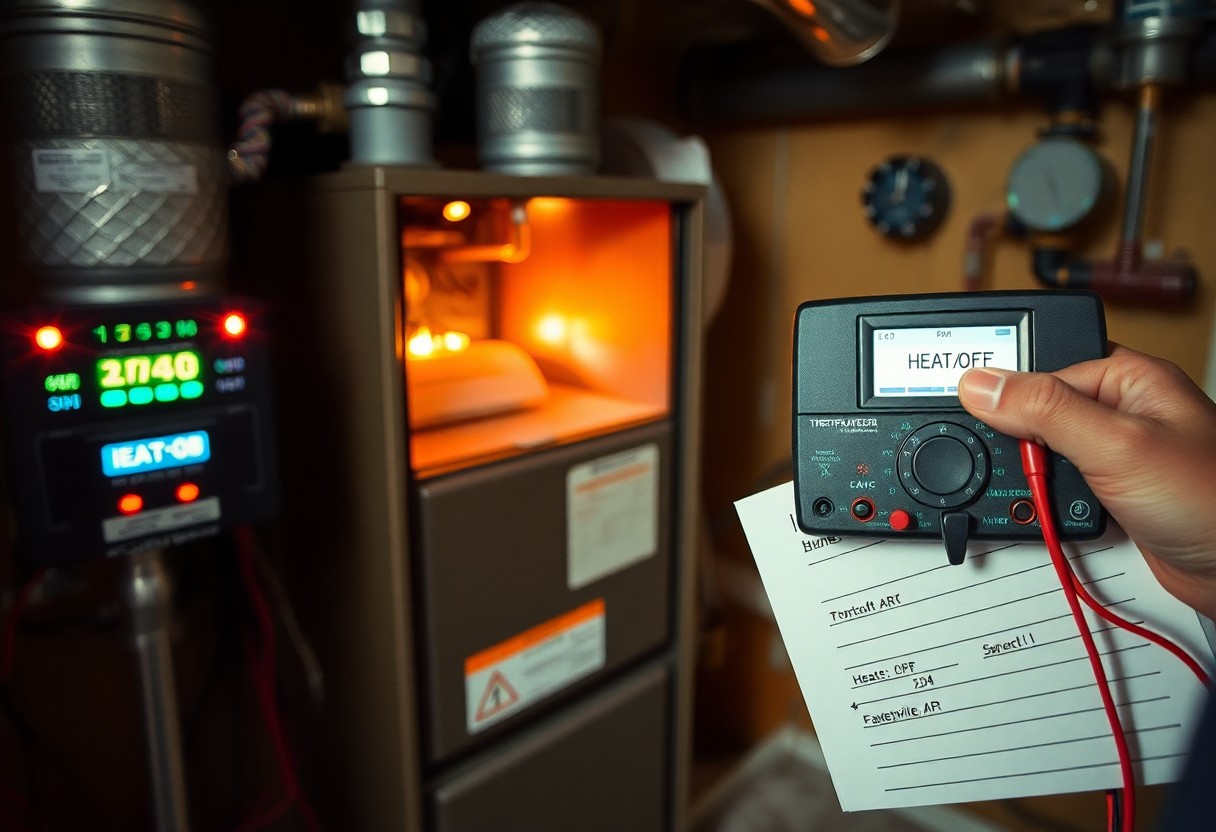
Fayetteville homeowners spot a furnace that short cycles; you should know short cycling raises energy bills, creates carbon monoxide dangers and causes premature system failure, so contact a pro to diagnose, repair, or replace parts and save money.
Key Takeaways:
- Short cycling forces the furnace to start and stop frequently, boosting energy consumption and driving up monthly heating bills.
- Oversized equipment, clogged filters, faulty thermostats, and airflow or pressure issues commonly trigger short cycling and accelerate component wear.
- Professional diagnosis, correct sizing or thermostat relocation, and regular maintenance cut cycle frequency, lower repair bills, and extend furnace lifespan.
Understanding Short Cycling: Mechanics and Symptoms
Short cycling happens when your furnace repeatedly stops and starts before completing a full heat cycle, increasing energy use and mechanical stress. You’ll notice uneven warmth, frequent clicks, and rising bills or premature component failure.
Defining the standard furnace heating cycle
Standard cycles run long enough for the heat exchanger to warm, your space to reach the thermostat setpoint, and for the system to cool; you expect consistent temperatures and steady runtimes.
Identifying the red flags of rapid cycling
Watch for very short runtimes (under five minutes), repeated starts, or cold spots; you’ll also see louder cycling and higher energy costs, indicating the system is not completing cycles.
Check furnace filters, return vents, and thermostat placement first; clogged filters, shorted limit switches, faulty thermostats, or an oversized unit commonly cause rapid cycling. If you smell gas, see flame irregularities, or the furnace trips repeatedly, shut it off and hire a pro-short cycling causes system damage and can pose a possible carbon monoxide risk if combustion is compromised.
Common Airflow Obstructions and Filter Issues
Blocked vents and filters force your furnace to short cycle, increasing wear and raising your HVAC bills; check for reduced airflow and visible obstructions so the unit doesn’t overheat.
The impact of clogged furnace filters on heat exchange
Dirty furnace filters restrict heat transfer, so your furnace runs hotter and cycles more, which shortens component life and spikes energy costs; replace filters regularly to avoid damage.
Obstructions in ductwork and return air vents
Obstructed ductwork or closed return vents create pressure imbalances that force your system to short cycle, producing cold spots, higher bills, and extra strain on the blower.
Inspect ducts for kinks, crushed sections, disconnected joints, or collapsed insulation that trap dust and debris; you should also check attic and closet grilles for storage or pet access blocking returns. These issues reduce capacity, increase runtime, and can lead to motor burnout and persistent uneven temperatures, so schedule sealing and cleaning when you spot problems.
Thermostat Malfunctions and Electrical Failures
Thermostat errors and intermittent electrical faults can make your furnace short cycle, increasing wear and energy costs while raising the risk of component failure. You should check settings and fuses when the system powers off and on frequently to avoid bigger repairs.
Improper thermostat placement and calibration
Placement near drafts, direct sunlight, or appliances gives your thermostat incorrect readings, so the furnace runs on and off and wastes fuel; you should recalibrate or relocate it to stabilize cycles.
Faulty wiring and communication errors
Wiring shorts, loose terminals, or a failed control board can make your thermostat and furnace lose sync, triggering short cycling and possible safety hazards; you should turn power off and call a licensed technician.
If you detect flickering controls, a burning odor, or erratic on/off cycles, wiring or control-board faults are likely; shut power off because live electrical hazards risk shock or fire. Inspect visible thermostat wiring for loose or corroded connections, but avoid touching live terminals. A licensed HVAC electrician can test transformers, relays, and communication lines, stopping repeated cycles and saving you money on premature component replacements.
Critical Component Failures and Safety Switches
Safety switches trip when components fail, so you see short cycling as the furnace protects itself; that frequent on/off behavior raises energy bills and strains parts, driving up repair and replacement costs.
Corroded flame sensors and ignition problems
Corroded flame sensors often fail to detect flame, so your furnace shuts off repeatedly; cleaning or replacing the sensor stops the cycling and reduces risk of gas leaks or system damage.
Overheating and the high-limit switch response
Overheating trips the high-limit switch, forcing your furnace to shut down to avoid damage; repeated trips indicate restricted airflow or failing components that worsen short cycling and costs.
When the high-limit switch keeps tripping, inspect filters, vents, blower motor, and ductwork, and get a technician to test the thermostat and heat exchanger; ignoring repeated shutdowns risks overheating, a cracked heat exchanger, and carbon monoxide, so you should schedule a professional inspection and repair or replace worn parts promptly.
The Economic Impact of Short Cycling
Short cycling forces your furnace into inefficient on/off loops, where each start consumes extra fuel and raises operating costs, leaving you with higher monthly bills and inconsistent warmth.
Exponential increases in monthly utility bills
Higher electricity and gas use from repeated startups pushes your utility bills into exponential territory, especially in Fayetteville’s cold months when cycles multiply.
Accelerated wear and premature system replacement costs
Frequent on/off cycles force your furnace components to work harder, increasing failure risk and creating premature replacement expenses that can exceed repair costs.
Repeated short cycling overloads igniters, belts, and motors, so you encounter more breakdowns and costly emergency repairs. You may be forced into early system replacement to restore reliable heat, compounding expenses with installation and disposal fees; evaluating thermostat settings, airflow, and a professional tune-up often prevents that outcome.
System Sizing and Fayetteville Climate Factors
- furnace short cycling
- oversized furnace
- Northwest Arkansas humidity
System sizing that fits Fayetteville’s mild winters and occasional cold snaps reduces short cycling, saves energy, and extends furnace life. Recognizing that you must match capacity to load prevents frequent cycles and higher bills.
The consequences of installing an oversized furnace
Installing an oversized furnace makes your unit heat quickly then shut off, causing short cycling, higher energy costs, and added wear that reduces lifespan for you.
How Northwest Arkansas humidity affects heating efficiency
High humidity in Northwest Arkansas often makes rooms feel warmer so your thermostat cycles less predictably, affecting heating efficiency and comfort you expect.
Because seasonal humidity shifts change perceived comfort and heat transfer, you may see increased furnace on/off cycles, higher bills, and uneven temperatures; using dehumidification, sealing leaks, or adjusting ventilation helps stabilize cycles and improves efficiency for you.
To wrap up
When your furnace keeps turning on and off in Fayetteville, AR, short cycling is almost always costing you money because the system burns extra fuel and power during repeated startups and never settles into its most efficient run time. The most common triggers are simple but expensive if ignored: a clogged filter or blocked return that makes the furnace overheat and trip the limit switch, a thermostat issue that causes false temperature readings, ignition or flame-sensor problems that shut the burners down, or an oversized furnace that heats too fast and shuts off before completing a normal cycle. Beyond higher heating bills, repeated short cycling accelerates wear on igniters, motors, and control boards, and in some cases can point to combustion and venting problems that should be taken seriously for safety.
If you are searching for this issue, it often shows up as furnace short cycling Fayetteville AR, furnace turning on and off every few minutes, furnace runs for 3 minutes then shuts off, high limit switch keeps tripping, thermostat causing short cycling, or dirty filter causing furnace to shut off. The fastest fix is a proper diagnosis of airflow, thermostat control, ignition, and sizing so you stop the cycle of repeat breakdowns. Blue Collar HVAC can inspect your system in Fayetteville, AR, identify what is forcing the short cycles, and get your furnace running longer, steadier cycles that restore comfort and lower your monthly heating costs.

